Nature
Wildlife on the Garden Route: birds, forest animals and fynbos
This is not safari country, and that is the point. The Garden Route's wildlife lives among you: turacos in the garden, bushbuck on the lawn, dolphins in the surf. A field guide to what you will actually see.

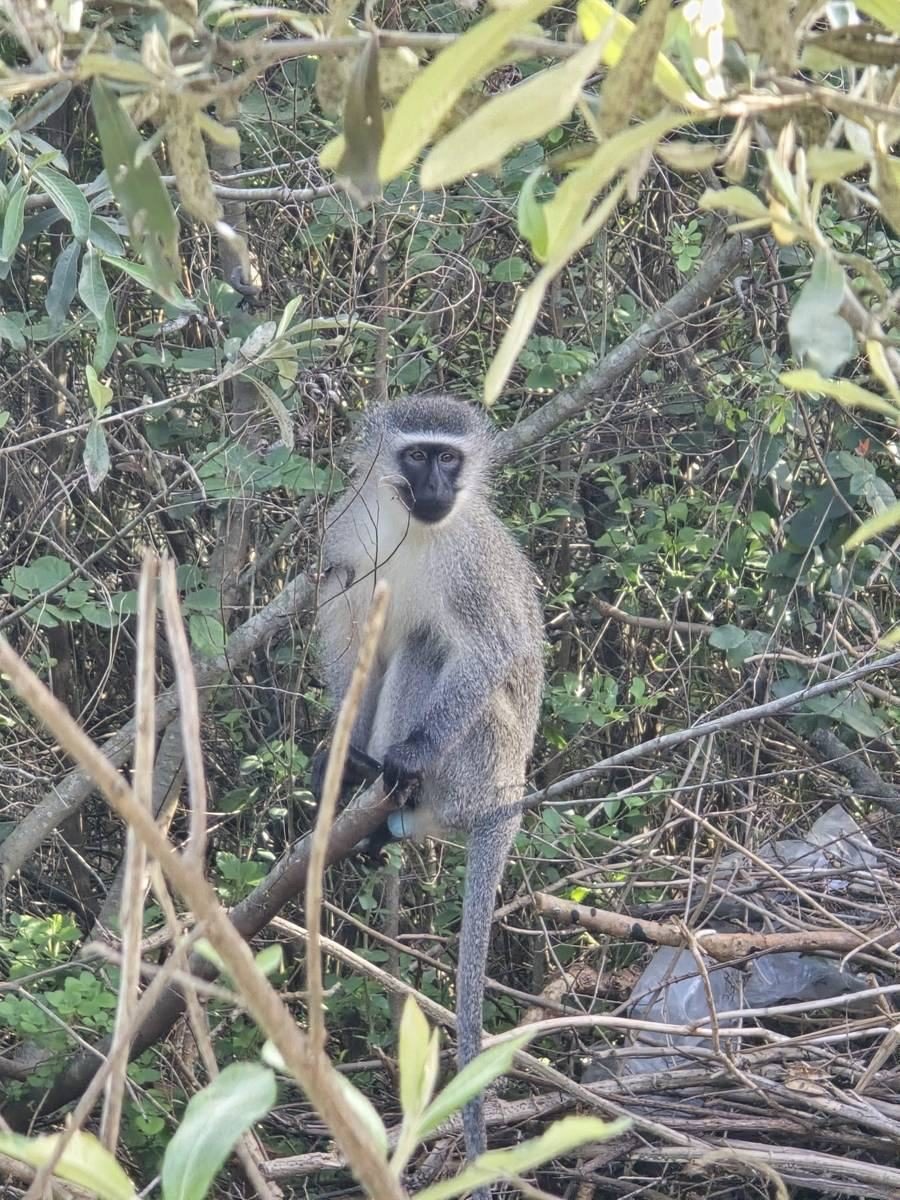
Vervet monkeys in the milkwoods and bushbuck at the forest edge are regular visitors on our land.
Kurz gesagt
The Garden Route's wildlife includes the Knysna turaco (a green forest bird with crimson wings), five kingfisher species in the Wilderness lakes, African fish eagles, bushbuck, vervet monkeys, baboons, Cape clawless otters, Cape fur seals, bottlenose and common dolphins year-round, and southern right and humpback whales from June to November. The region lies in the Garden Route Biosphere Reserve (UNESCO, 2017), which protects South Africa's largest indigenous forest and part of the Cape Floral Kingdom's fynbos.
- Signature bird
- Knysna turaco (loerie)
- Birds in the national park
- About 300 species
- Kingfishers at Wilderness
- Five species
- Marine mammals
- Dolphins year-round; whales Jun to Nov
- Protected status
- UNESCO Biosphere Reserve since 2017
In diesem Guide
People come to South Africa for the Big Five, and many drive the Garden Route on the way to or from a game reserve. They often leave surprised at how much wildlife they saw here without looking for it. A turaco crossing the road in a flash of red. A bushbuck standing perfectly still at the edge of a lawn. A pod of dolphins riding a wave while you swim fifty metres away.
This is a guide to the animals and plants you will realistically meet, and where to find them.
A protected landscape
In June 2017 UNESCO declared the Garden Route Biosphere Reserve, South Africa's ninth. It covers almost 700,000 hectares, including the Garden Route National Park, the Wilderness Lakes wetlands, the marine protected areas of Tsitsikamma, Goukamma and Robberg, and parts of the Cape Floral Region World Heritage Site. About 450,000 people live inside it. The idea is not to fence nature off but to live alongside it, which is exactly what you experience here.
Birds
The Garden Route National Park lists around 300 bird species, and you do not need to be a birder to enjoy them.
Knysna turaco
The emblem of the region. A green, crested forest bird that looks unremarkable until it flies and reveals brilliant crimson wings. Listen for its deep, croaking call in the canopy, then watch for the flash of red. Common in forest gardens, including on the ridge above Wilderness.
The five kingfishers of Wilderness
The Wilderness section of the national park is one of the few places where you can see five kingfisher species in a day: giant, pied, malachite, brown-hooded and half-collared. The trails are named after them. The pied kingfisher hovers over the water before diving; the tiny, jewel-like malachite sits low in the reeds; the half-collared is shy and prefers shaded streams like the Touw River.
Water birds and raptors
The Wilderness lakes are a Ramsar wetland and Important Bird Area. From the Rondevlei hide you can watch African fish eagles, purple swamphens, grebes, herons, egrets and, in some seasons, flamingos. In the forests look for the African crowned eagle and, at dusk, the African wood owl. Along the coast, Cape gannets dive into shoals and African oystercatchers patrol the rocks.

Forest and fynbos animals
- Bushbuck: a shy antelope with spiral horns (males) and white spots, often at forest edges at dawn and dusk.
- Blue duiker: a tiny forest antelope, hard to spot.
- Vervet monkeys: grey monkeys with black faces, clever and curious. Do not feed them and never leave food in an open car or window.
- Chacma baboons: in the mountains and some coastal areas. Keep your distance.
- Cape clawless otter: mostly seen as tracks on river sandbanks and rocky shores.
- Bushpig, caracal and leopard live in the mountains and forests too, but you would be very lucky to see them.
The last Knysna elephant
The Knysna forest was once home to about a thousand elephants. Hunting from the 1700s onwards destroyed the herds, and today SANParks camera traps consistently record only one, a female known as Strangefoot, thought to be around 50 years old. She is almost never seen. Her story is a reminder of what the forest has lost, and why protecting what remains matters.
In the sea
- Dolphins: bottlenose dolphins are resident all year and often surf the waves off Wilderness and Plett. Common dolphins arrive in huge, fast-moving groups, especially around the sardine season. The rare Indo-Pacific humpback dolphin prefers shallow water close to shore.
- Whales: southern right and humpback whales pass from June to November; Bryde's whales stay for most of the year. See our whale watching guide.
- Cape fur seals: thousands live on the Robberg peninsula in Plettenberg Bay.
- The Knysna seahorse: one of the world's rarest seahorses, found only in a handful of Garden Route estuaries, including Knysna, Swartvlei and Keurbooms.
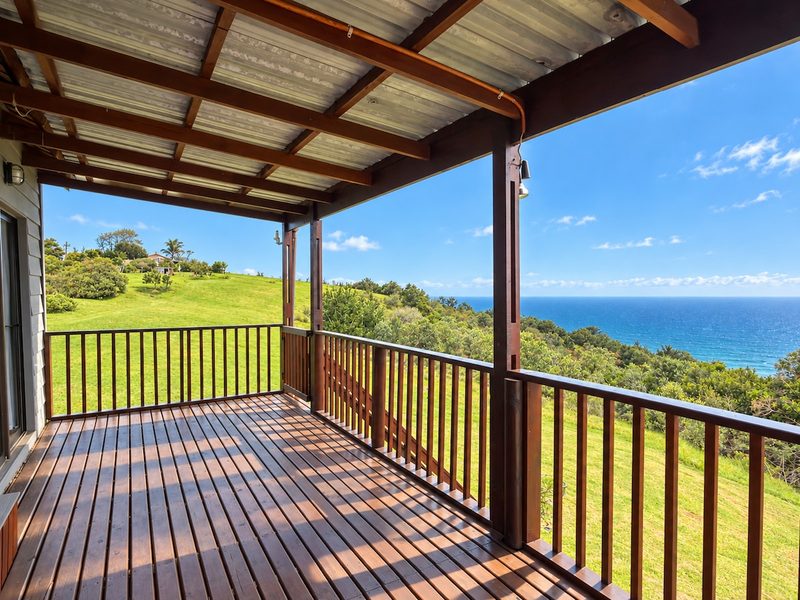 Wohnen, wo diese Geschichte spieltTwenty-one hectares of forest edge and fynbos, and the animals that come with them.Drei Selbstversorger-Unterkünfte auf 21 Hektar über Wilderness. Direkt buchen zum besten Preis.Daten prüfen →
Plants: fynbos and forest
Fynbos
The Cape Floral Kingdom is the smallest and richest of the world's six floral kingdoms, and fynbos is its signature vegetation: fine-leaved shrubs, proteas, ericas and restios that grow on poor soils and depend on fire to regenerate. On the Garden Route you find fynbos on the coastal plains and mountain slopes. Look for king proteas, South Africa's national flower, and the orange-breasted sunbird that feeds on them.
Afromontane forest
The Garden Route holds the largest area of indigenous forest in South Africa. Its giants are Outeniqua yellowwoods, some of them many centuries old, plus stinkwood, ironwood and white milkwood. The Woodville Big Tree near Wilderness is thought to be about 800 years old and 33 m tall.
Responsible watching
- Keep your distance; if an animal changes its behaviour, you are too close.
- Never feed wild animals, including monkeys and birds.
- Drive slowly on forest roads, especially at dawn and dusk.
- Take litter with you, and pick up any you find on the beach.
- Choose licensed operators for marine trips; they have permits to approach whales safely.
Häufige Fragen
Can you see the Big Five on the Garden Route?
Not in the wild. The Garden Route is not Big Five country. The nearest private reserves with the Big Five, such as Gondwana near Mossel Bay, are fenced reserves within a short drive.
What is the Knysna turaco?
A green forest bird with bright crimson flight feathers, also called the Knysna loerie. It is the emblematic bird of the Garden Route forests.
Where can I see kingfishers on the Garden Route?
In the Wilderness section of the Garden Route National Park, where five species live along the Touw River and around the lakes.
Are there elephants in the Knysna forest?
Camera-trap surveys consistently record only one remaining wild elephant, a female known as Strangefoot. She is very rarely seen.
What is fynbos?
The fine-leaved shrubland of South Africa's Cape Floral Kingdom, including proteas, ericas and restios. It is one of the most species-rich plant communities on Earth.
Wir leben an der Garden Route und aktualisieren diesen Guide jede Saison. Etwas hat sich geändert? Sag es uns.