Food & Culture
How to braai like a South African: fire, gas and four easy recipes
A braai is not a barbecue. It is an afternoon with a fire in the middle. Here is how to do it on holiday, with four recipes that work for beginners and impress South Africans.
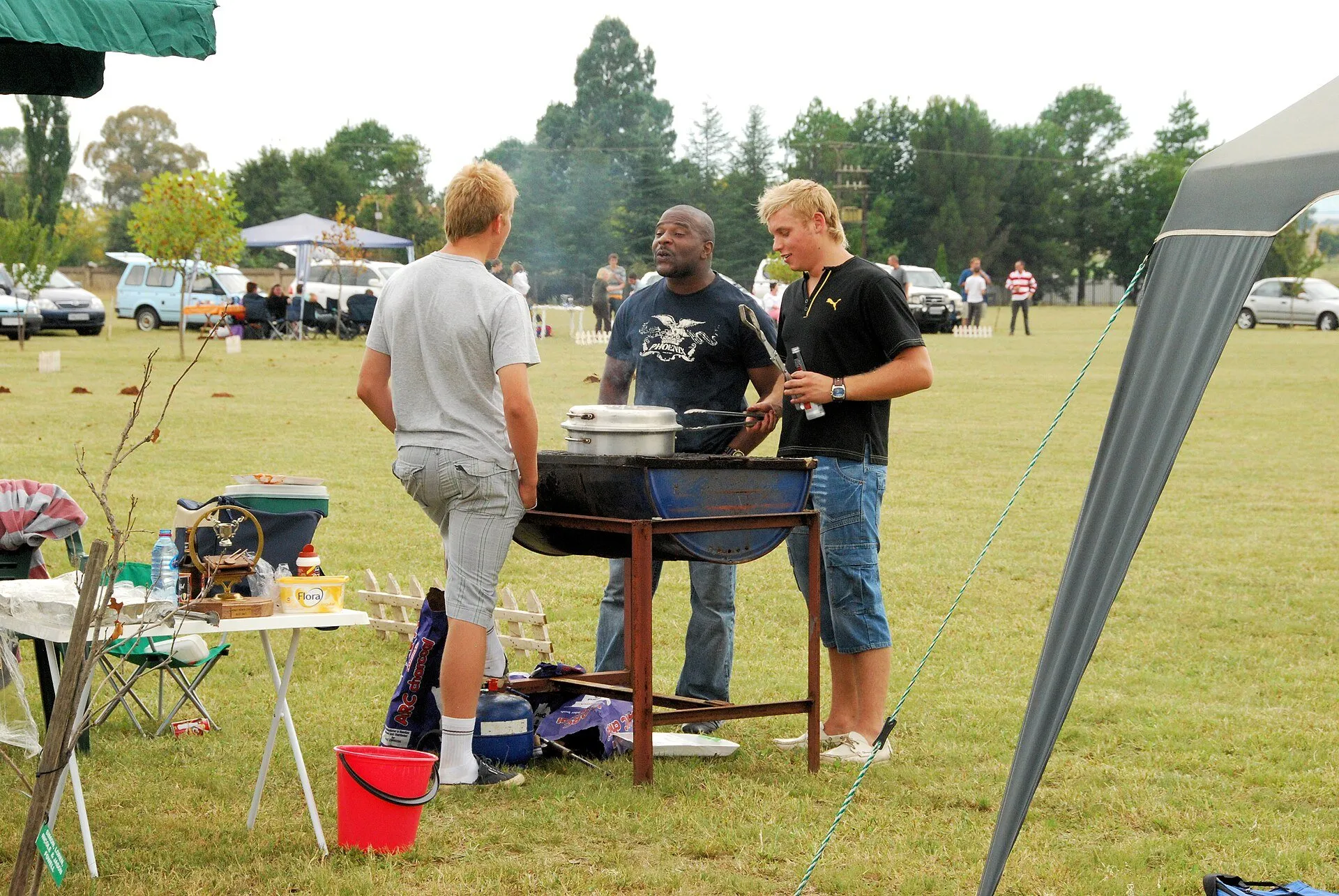
Every place at Ecoresort Wilderness has its own gas braai.
The short answer
A braai is the South African way of cooking over fire, and the social gathering around it. Traditionally it is done over wood coals (often rooikrans, an invasive alien tree), but a gas braai works well too. Classic braai food includes boerewors (coiled farm sausage), lamb chops, sosaties, fish basted with apricot jam, braaibroodjies (toasted cheese, tomato and onion sandwiches) and pap (maize porridge) with a tomato-and-onion sauce. Heritage Day on 24 September is also known as National Braai Day.
- Braai
- Afrikaans for grill or roast, and the gathering around the fire
- Wood
- Rooikrans, an invasive tree, makes the classic coals
- Coals ready
- When covered in white ash and you can hold a hand above them for a few seconds
- Braai Day
- 24 September (Heritage Day)
- Shopping
- Butcher for boerewors and chops; supermarket for the rest
In this guide
Ask a South African to explain the braai and you will get a long answer, a strong opinion about wood, and probably an invitation.
It looks like a barbecue. It is really an afternoon: someone lights a fire, everyone stands around it with a drink, and the meat goes on only when the coals are right, which takes as long as it takes. Our guide to South African culture covers the braai in a few lines. This is the long version, with recipes.
Wood, charcoal or gas
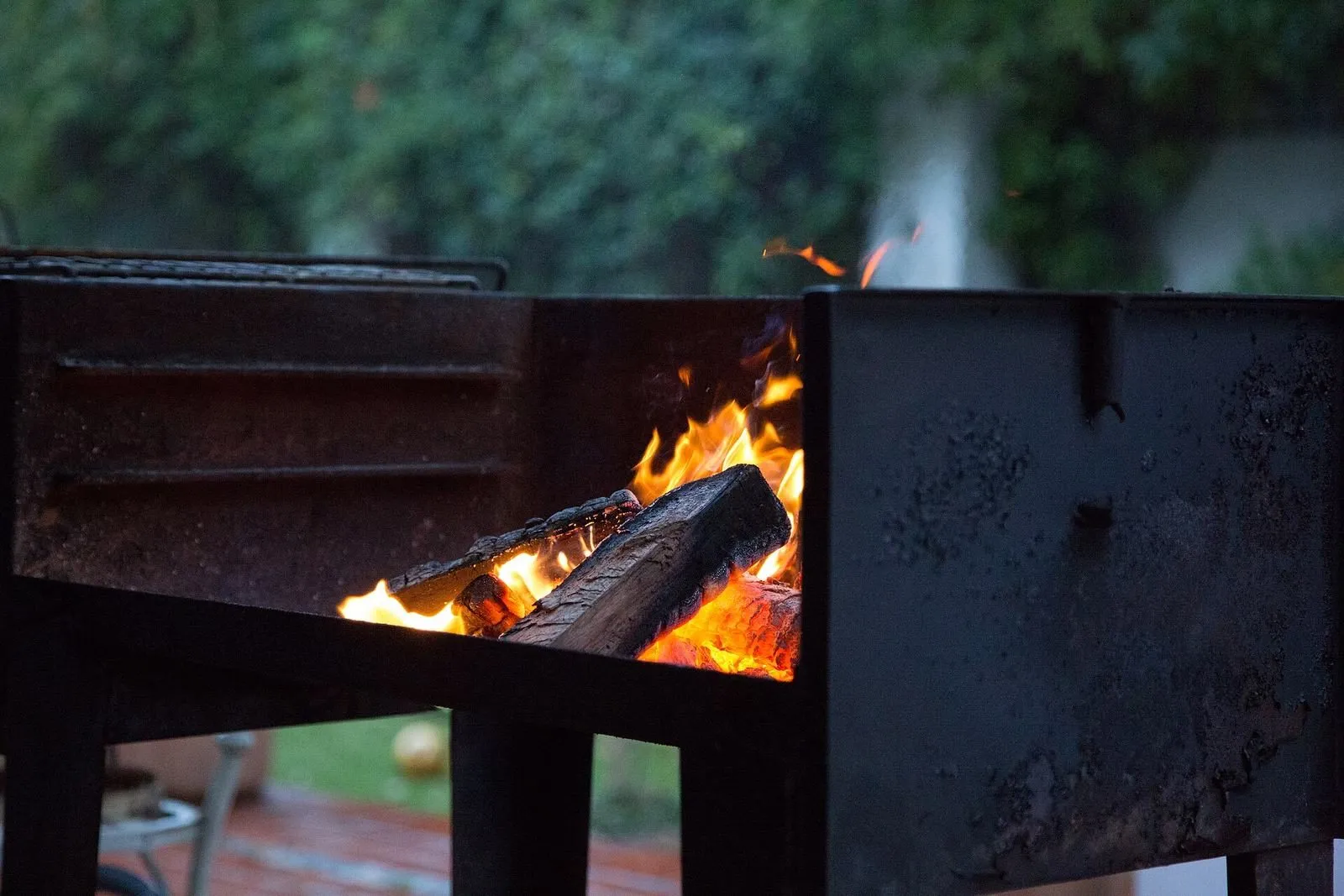
Wood is the real thing. In the Western Cape that usually means rooikrans, an acacia brought from Australia in the 19th century to hold the dunes of the Cape Flats. It now chokes fynbos across the province and is one of the region's worst invasive plants. It also happens to make some of the best coals in the country, and much of the braai wood sold here comes from clearing it. Here on the ridge, getting rid of invasive trees is a large part of what we do, so we like that link.
Charcoal or briquettes are faster and more predictable. Fine, but do not call it a braai in front of an uncle.
Gas is what you will find at each of our places. It is quick, clean and needs no fire-watching. A gas braai will not give you wood smoke, but it does everything else well.
Making good coals
- Build a small pile of crumpled newspaper or firelighters, with thin kindling over it and four or five pieces of wood on top in a teepee.
- Light it and leave it. Resist the urge to poke.
- After 30 to 45 minutes the flames die down and the wood breaks into glowing coals with a white ash coat.
- Rake the coals into an even bed, a little thicker on one side. That gives you a hot zone and a gentle zone.
- The hand test: hold your hand about 10 cm above the grid. If you can count to two, it is hot; to five, it is medium; to eight, it is gentle.
Cook in this order: braaibroodjies and boerewors need medium heat, chops and steak hot, fish gentle.
On a gas braai
Open the lid, light all burners, close the lid and preheat for about 10 minutes. Then turn one side down to low to make two zones. Clean the grid with a brush while it is hot, and brush on a little oil. Keep the lid closed between turns so the heat stays even.
The rules nobody writes down
- There is one braaimaster. Do not touch their tongs unless asked.
- Never prick boerewors. The juice is the point.
- The fire is the place to stand and talk. The kitchen is for salads.
- Food is ready when it is ready. Eating at nine is normal.
- When you are invited, bring your own meat and drinks unless told otherwise. "Bring and braai" is a standard arrangement.
Four easy braai recipes
Quantities are for four people.
1. Braaibroodjies
The unofficial best part of any braai: toasted sandwiches, made in a hinged grid over gentle heat while the meat rests.

- 8 slices of white bread
- 200 g grated cheddar or gouda
- 2 tomatoes, sliced
- 1 small onion, very thinly sliced
- Fruit chutney (Mrs Ball's is the classic), salt and pepper
- Soft butter
Spread chutney on four slices. Layer cheese, tomato, onion, a little salt and pepper, and more cheese. Close with the other slices and butter the outsides. Clamp them in a hinged braai grid and toast over gentle coals for 3 to 4 minutes a side, turning often, until golden and the cheese has melted.
2. Boerewors
South Africa's farm sausage: beef, often with pork, spiced with coriander, sold in one long coil. Buy it from a butcher rather than a supermarket if you can.

- 1 kg boerewors
Keep the coil whole. Put it on a medium-hot grid, or in a hinged grid, which makes turning easy. Cook for about 12 to 15 minutes, turning two or three times, until the skin is browned and firm and the juices run clear. Do not prick it. Rest for two minutes, then cut into pieces. Serve with pap and tomato sauce (recipe 4) or in a roll with fried onions.
3. Fish with apricot glaze
On the West Coast this is made with snoek. On the Garden Route ask the fishmonger for whatever line fish is fresh. The fish should be butterflied, with the skin on.
- 1 kg firm white fish, butterflied, skin on
- 3 tbsp apricot jam
- 2 tbsp butter
- 2 cloves garlic, crushed
- Juice of half a lemon, salt and pepper
Melt the butter, jam, garlic and lemon juice together. Season the fish. Put it skin side down in an oiled hinged grid over gentle heat and baste the flesh generously. Cook for about 10 minutes, almost entirely on the skin side, basting as you go. Turn it over for only the last minute or two, just to colour the top. The fish is done when it flakes.
4. Pap with tomato and onion sauce
Pap is maize porridge, the staple that sits next to the meat. Stywe pap is firm and eaten with your hands or a fork. The sauce, known by many names including smoorsous or sheba, is the classic partner.
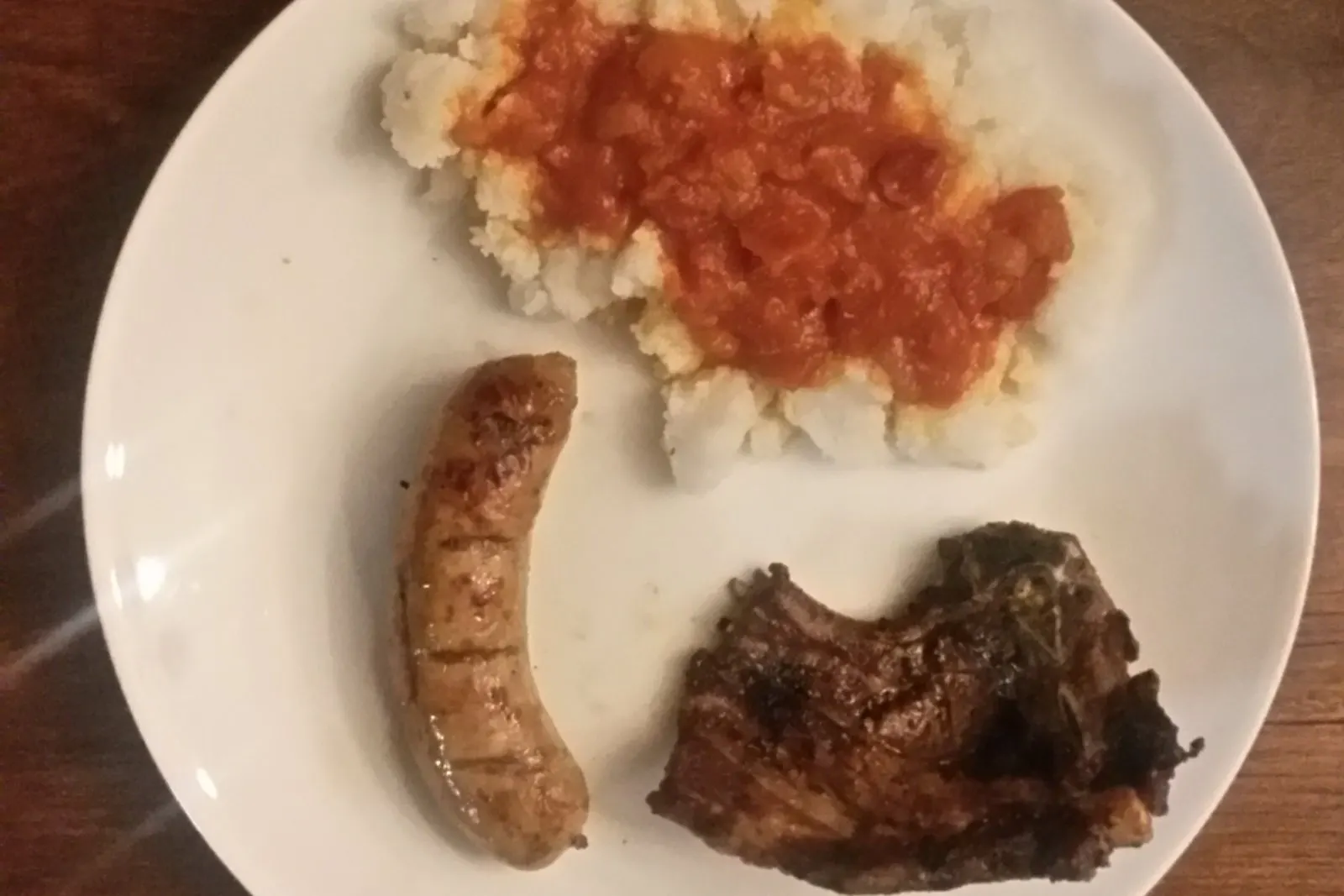
For the pap:
- 500 ml water, 1 tsp salt
- 250 ml white maize meal (sold as "super maize meal")
For the sauce:
- 1 onion, chopped, and 2 cloves garlic
- 1 tin chopped tomatoes (400 g)
- 1 tsp sugar, a pinch of chilli, salt and pepper
Bring the salted water to the boil in a heavy pot. Pour in the maize meal in one go and do not stir. Put the lid on and leave it on low heat for 5 minutes. Then stir hard with a wooden spoon or fork to break up the lumps, lid back on, and cook on the lowest heat for about 20 minutes, stirring once or twice, until firm and dry. For the sauce, soften the onion and garlic in a little oil, add the tomatoes, sugar and chilli, and simmer for 15 minutes until thick.
Shopping near Wilderness
Wilderness village, about 5 km from us, has shops for the basics. For a proper braai, stock up in George, about 15 minutes further, with large supermarkets and butchers. Wood and charcoal are sold at supermarkets and fuel stations. Our restaurant guide is for the nights you would rather someone else cooked.
Braai Day
Heritage Day on 24 September, a public holiday, is also known as National Braai Day. The idea came from Jan Scannell, who launched it in 2005 and became known as Jan Braai. Archbishop Desmond Tutu became its patron in 2007, and the National Heritage Council later endorsed it, although some still argue that grilling meat is not the best way to mark the country's heritage. Either way, on 24 September the whole country smells of woodsmoke.
Frequently asked questions
What is the difference between a braai and a barbecue?
The grill is similar. The difference is the event. A braai is a social occasion that usually lasts the whole afternoon or evening, traditionally over wood coals rather than gas or charcoal briquettes, and the fire is the centre of the gathering.
What wood is used for a braai?
In the Western Cape the classic braai wood is rooikrans, an Australian acacia that has become a serious invasive plant. Burning it is one of the few things that helps. Bags are sold at supermarkets, fuel stations and roadside sellers.
How do you know when braai coals are ready?
When the flames have died down, the coals are glowing and covered in a thin layer of white ash, and you can hold your hand about 10 cm above the grid for a few seconds before it gets too hot. That usually takes 30 to 45 minutes after lighting.
Can you braai on a gas braai?
Yes. Purists prefer wood, but a gas braai is quicker and cleaner, and fine for boerewors, chops, fish and braaibroodjies. Preheat it with the lid closed for about 10 minutes.
What is National Braai Day?
An informal name for Heritage Day, the public holiday on 24 September. The idea was launched in 2005 by Jan Scannell, known as Jan Braai, and Archbishop Desmond Tutu became its patron in 2007.
We live here, visit these places ourselves and update this guide from time to time. Something changed? Tell us.