Adventure
Paragliding holiday in Wilderness: how to plan a flying trip to South Africa
Pilots fly to Wilderness every southern summer for soft coastal soaring. Here is how to plan the trip: when to come, the paperwork, a flying day, what to do when it blows out, and where to stay next to launch.
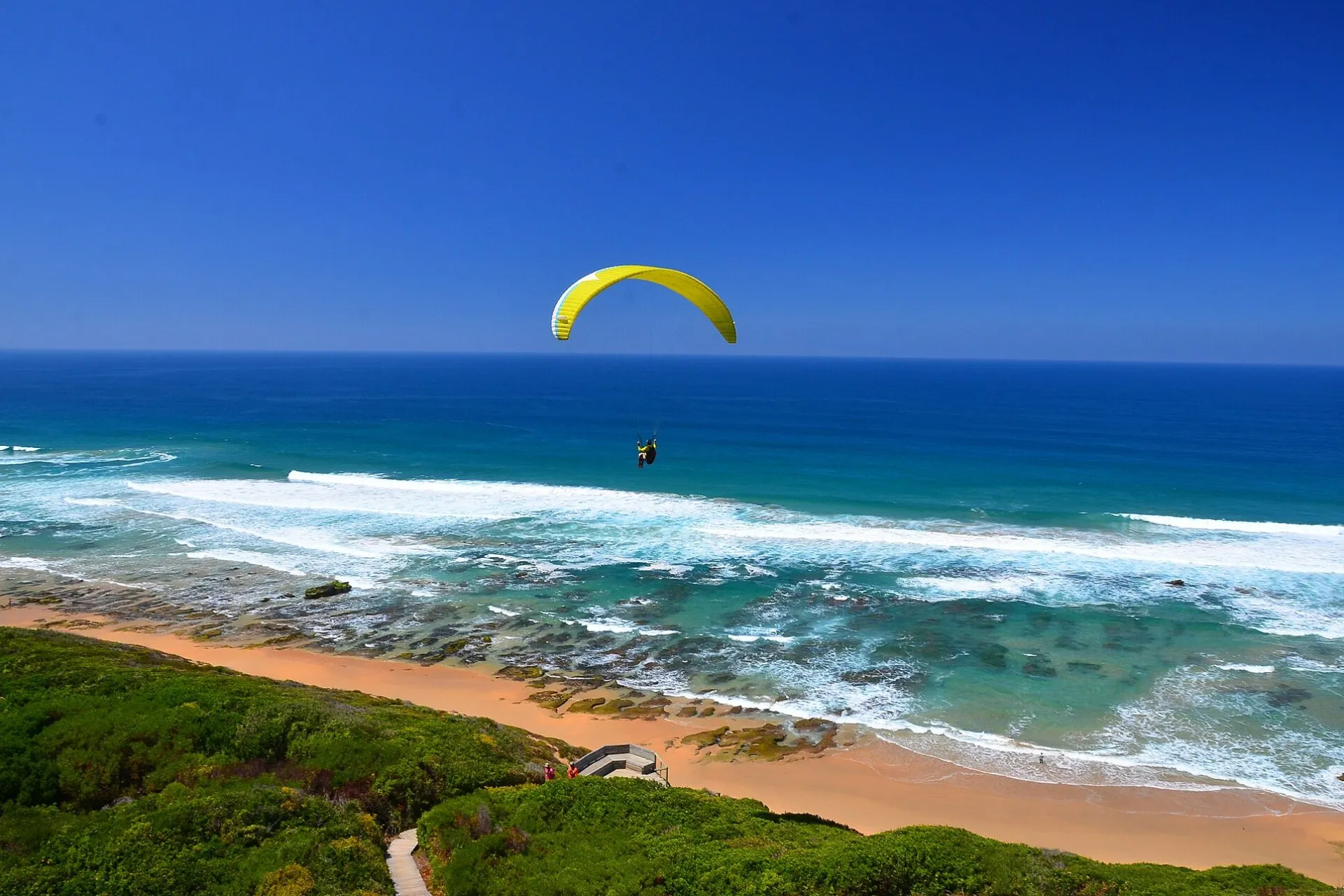
From our cottage to the Map of Africa launch is about 220 m on foot.
The short answer
Wilderness on the Garden Route is one of South Africa's main paragliding destinations, with reliable coastal ridge soaring from about October to April. Visiting pilots need a SAHPA foreign membership (valid for three or six months, includes third-party liability insurance) and an IPPI 4 card or higher; pilots with IPPI 3 or below fly under an approved school. Site fees for places like the Map of Africa, Sedgeview and Gericke's Point are paid separately. Plan at least a week to fly, two if you want to learn. Fly into George Airport, about 20 minutes away, and hire a car.
- Best months
- October to April, steady sea breezes
- Trip length
- A week to fly, two weeks for a course
- Visiting pilots
- SAHPA foreign membership plus IPPI 4 or higher
- Site fees
- Paid separately per site, for example Map of Africa, Sedgeview
- Nearest airport
- George (GRJ), about 20 minutes
- Rest days
- Hikes, canoeing, beaches, braai
In this guide
Every southern summer, pilots from Europe arrive in Wilderness with a wing in their luggage and the same plan: fly every afternoon the wind allows, and do something else when it does not.
It works remarkably well. The Garden Route coast gives you mellow ridge soaring above long empty beaches, a dozen sites within half an hour, and a small town that is used to people in harnesses. This article is about planning that trip. For the sites themselves, wind directions and tandem prices, read our paragliding guide to the Garden Route.
When to come
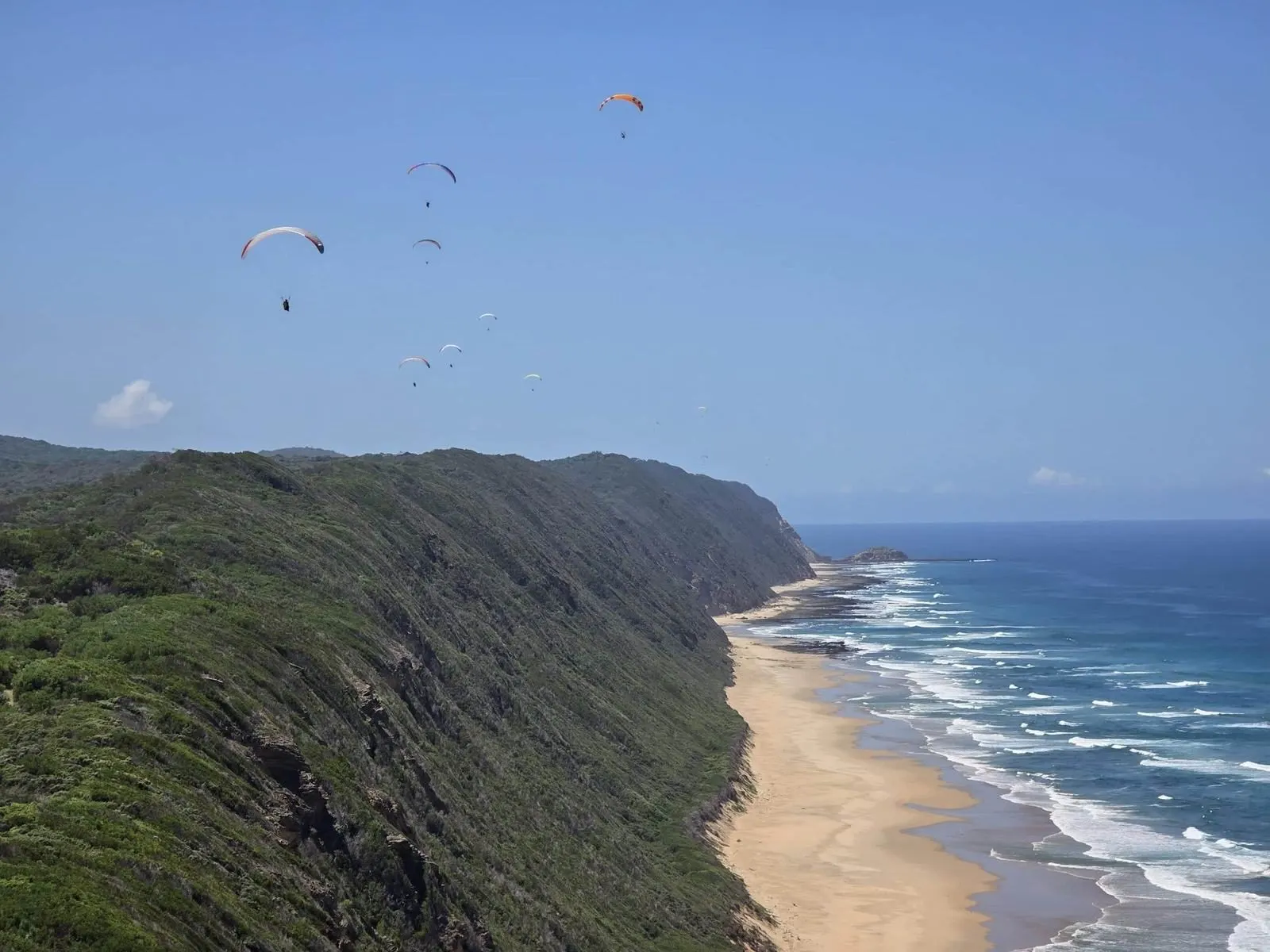
The flying season follows the sea breeze. From about October to April the land warms up faster than the ocean, and on most afternoons a south to south-easterly breeze blows onto the coastal ridges. That is what keeps wings hanging over the Map of Africa for hours.
- November, February and March are the sweet spot for many pilots: reliable conditions, warm water, fewer people.
- December and January are high summer. Great flying, but the beaches and roads are full and accommodation books out early. See the best time to visit the Garden Route for the holiday calendar.
- May to September is winter. Flyable days still happen, especially inland, but they are less predictable. It is the cheapest time to stay and the best time for whales.
How long to stay
Weather decides your flying, not your booking. Even in season you will have days that are too strong, too light, rainy or in the wrong direction.
- Qualified pilots: plan at least a week. Ten days to two weeks gives you a good chance of many flying days and time for an inland site or a cross-country attempt with a local.
- Learning to fly: allow two weeks or more. A course needs a run of flyable days, and a good school will not rush you.
- Trying a tandem: a few days is enough, but book early in your stay so you have spare days if the first slot is cancelled.
Paperwork for visiting pilots
South Africa takes the rules seriously, and they are simple once you know them.
- SAHPA membership is compulsory. Every pilot, including visitors, must belong to SAHPA, the national association. The foreign pilot membership is applied for online, is valid for three or six months, and includes the mandatory third-party liability insurance.
- IPPI 4 or higher lets you fly on your own. With IPPI 3 or below you fly under the supervision of an approved school. No IPPI card? A school assesses you and signs you off.
- Tandem passengers need no licence, membership or experience. Book with a local school and just come along; the school takes care of the rest.
- Site fees are extra. Sites such as the Map of Africa, Sedgeview and Gericke's Point collect their own fees. Sedgeview can be paid online before you fly; for the others, ask the club or a school on arrival.
- Airspace: George Airport is close. At the Map of Africa you notify George air traffic control before flying and stay east of the Kaaimans River. Get a local site briefing before your first flight.
- Insurance: SAHPA cover is third-party only. Bring your own medical, rescue and equipment insurance.
Parakiting: the Wilderness speciality
The long, soft dunes between Wilderness and Sedgefield have made this stretch of coast South Africa's hotspot for parakiting: small, fast wings that let you soar in winds that would ground a normal paraglider, and launch from the beach. If you already fly, a few days with MountAIR in Wilderness and Sedgefield is a great way to add more flying days to a trip.
A flying day
There is no fixed timetable, but on a typical summer day it goes like this:
- Morning: often light winds. Coffee on the deck, a walk on the beach, a check of the forecast and the live wind stations.
- Late morning to midday: the sea breeze builds. Pilots gather at launch and watch the first wing go up.
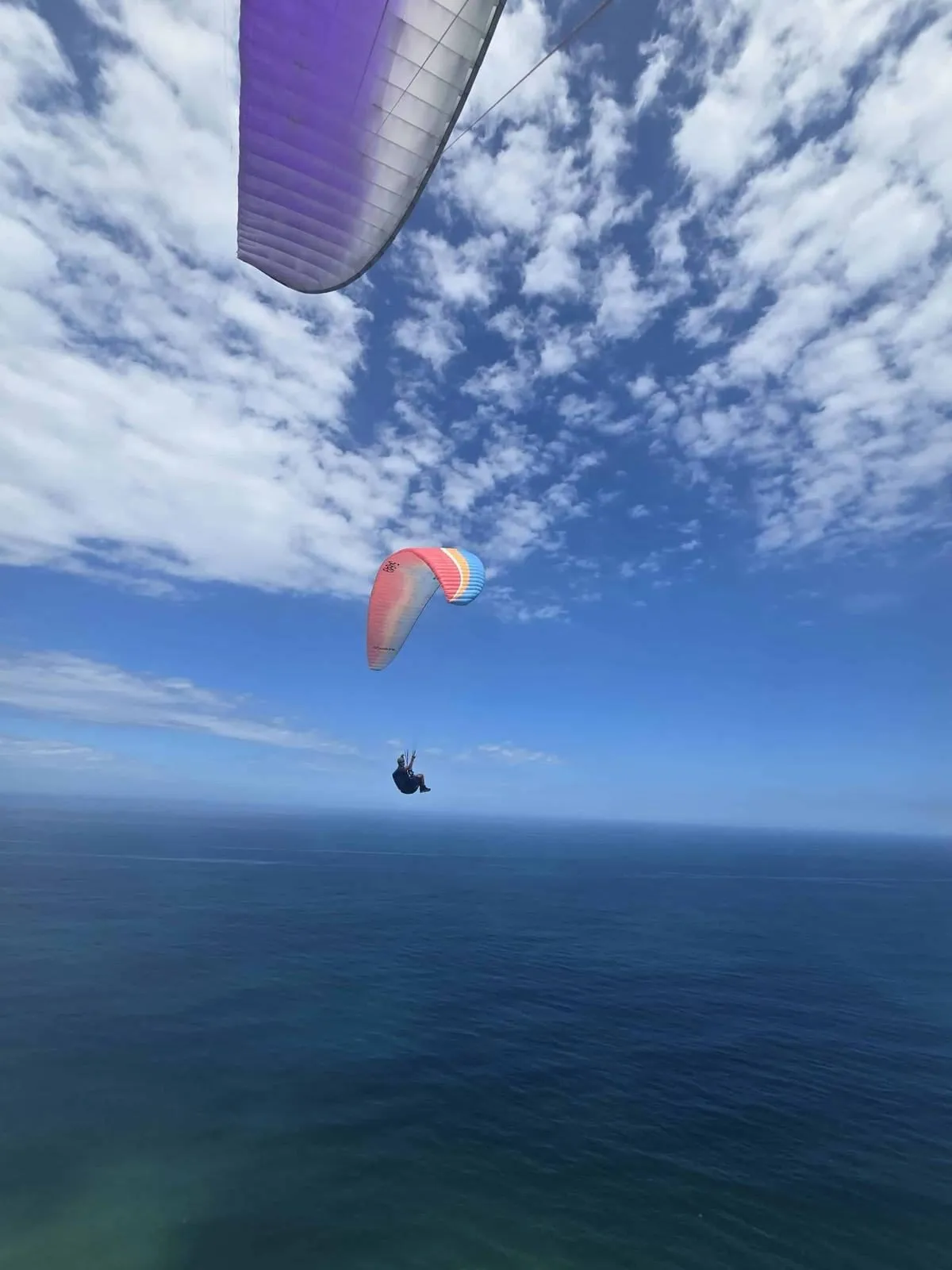
- Afternoon: the main soaring window. On a good day you can stay up for hours and hop between the ridges along the coast.
- Evening: packing up on the beach, then a sundowner and a braai.
The local schools run WhatsApp groups that say each morning which site is likely to work. Ask to join on day one.
Getting there and getting around
Fly to George Airport (GRJ), about 20 minutes from Wilderness, with a connection in Johannesburg or Cape Town. Check your airline's rules for sports equipment before you pack a wing and harness. You will need a rental car: sites are spread along the coast, and the best one changes with the wind. All the options are in how to get to Wilderness.
When it is not flyable
Blown-out days are part of every flying trip. Wilderness is good at those too:
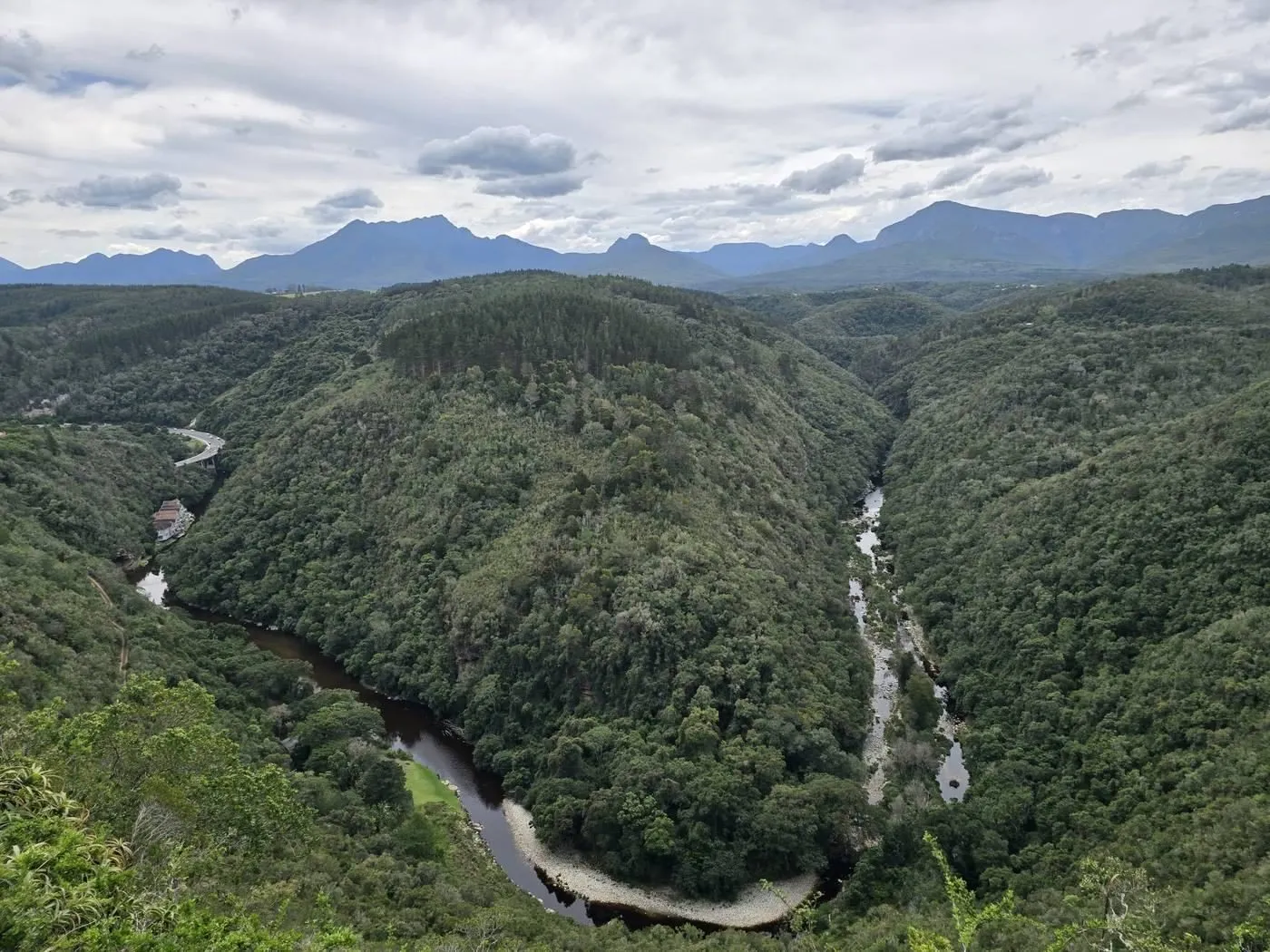
- Hike the forest and the coast: the best hikes on the Garden Route.
- Paddle up the Touw River to the waterfall: kayak and waterfall trail.
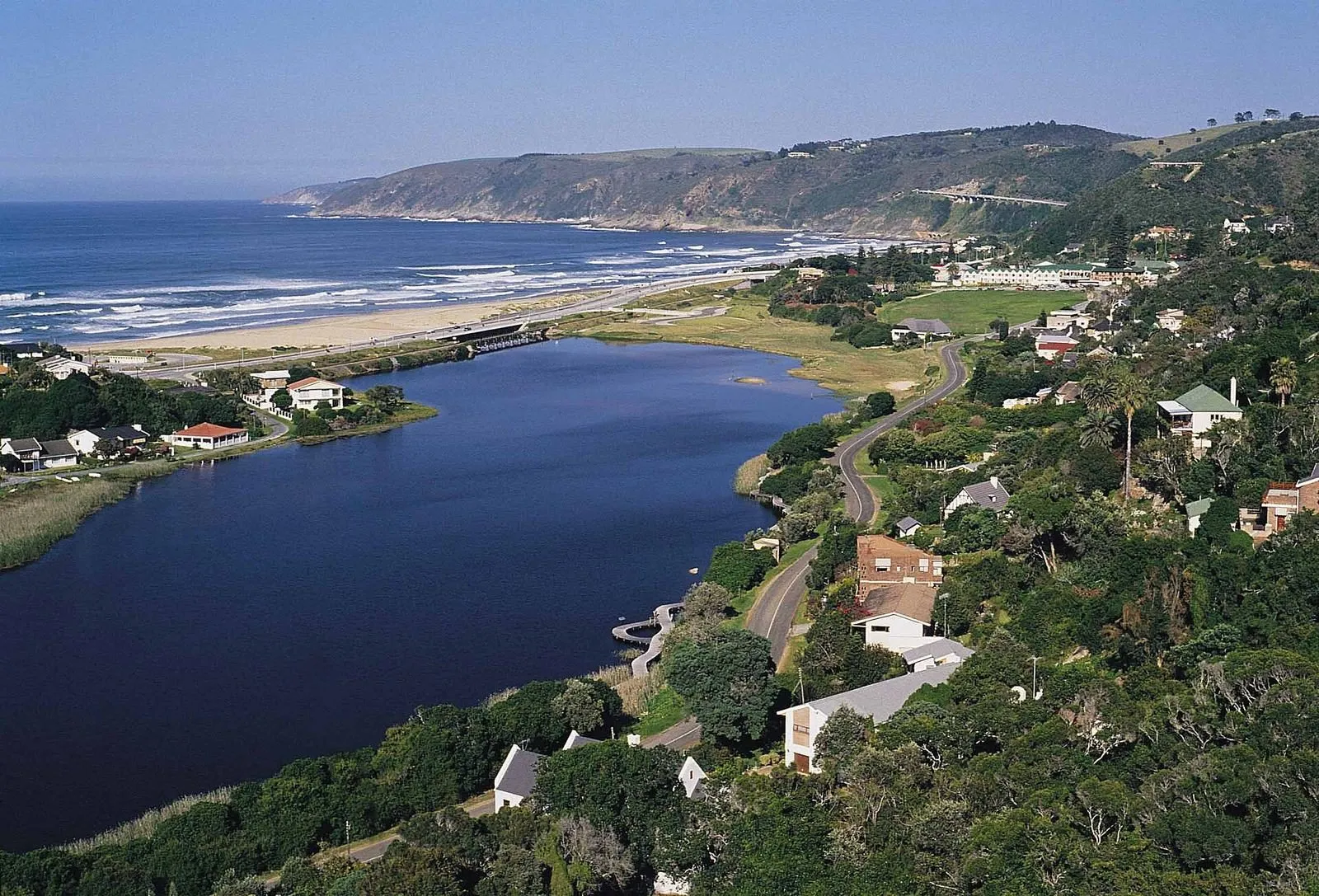
- Watch the others fly from the Map of Africa viewpoint, or go there at sunrise.
- Pick a beach: the best beaches on the Garden Route.
Where to stay
For pilots, distance to launch matters more than anything else. If you can check the wind from the deck and walk to launch, you never miss a window because you were stuck in traffic.
Ecoresort Wilderness sits on the ridge right next to the Map of Africa, about 220 m from the launch. We have three self-catering houses on 21 hectares: a cottage for four and two studios. Together they sleep up to 10 guests (11 with the sofa bed), which makes them a natural base for a group of pilots or a school group. Book all three and you get 15 % off. Every house has its own gas braai and views of the sea, the mountains or the forest.
Check availability or tell us about your group and we will help with the dates.
Frequently asked questions
When is the best time for a paragliding holiday in Wilderness?
October to April. In the southern summer the land heats up faster than the sea and a south to south-easterly sea breeze blows onto the coastal ridges on most afternoons. December and January are the busiest weeks; November, February and March are usually just as good to fly and quieter.
Do foreign pilots need a licence to fly in South Africa?
Yes. Every visiting pilot must be a member of SAHPA, the national association. The foreign pilot membership is valid for three or six months and includes third-party liability insurance. You need an IPPI 4 card or higher to fly on your own; with IPPI 3 or below you fly under the supervision of an approved local school. Without an IPPI card, a school has to assess you and sign you off.
Are there site fees?
Yes. SAHPA membership does not include site fees. Sites such as the Map of Africa, Sedgeview and Gericke's Point collect their own fee. Ask the local school or club on arrival; Sedgeview can be paid online before you fly.
How long should a paragliding trip to Wilderness be?
Plan at least a week if you are a qualified pilot, so a few windy or rainy days do not ruin the trip. If you want to learn, allow two weeks or more: a course needs a run of flyable days, and the weather decides the pace.
Do I need anything for a tandem flight?
No. Tandem passengers need no licence, membership or experience. Book with a local school and just come along; the pilot and the school take care of the rest.
Where should pilots stay in Wilderness?
Close to launch saves a lot of driving to check conditions. Ecoresort Wilderness is on the ridge about 220 m from the Map of Africa launch, with three self-catering houses for up to 10 guests (11 with the sofa bed) and 15 % off when a group books all three.
We live here, visit these places ourselves and update this guide from time to time. Something changed? Tell us.